Best Vienna Wine Tours: Guided Tastings, Bike & Countryside Trips
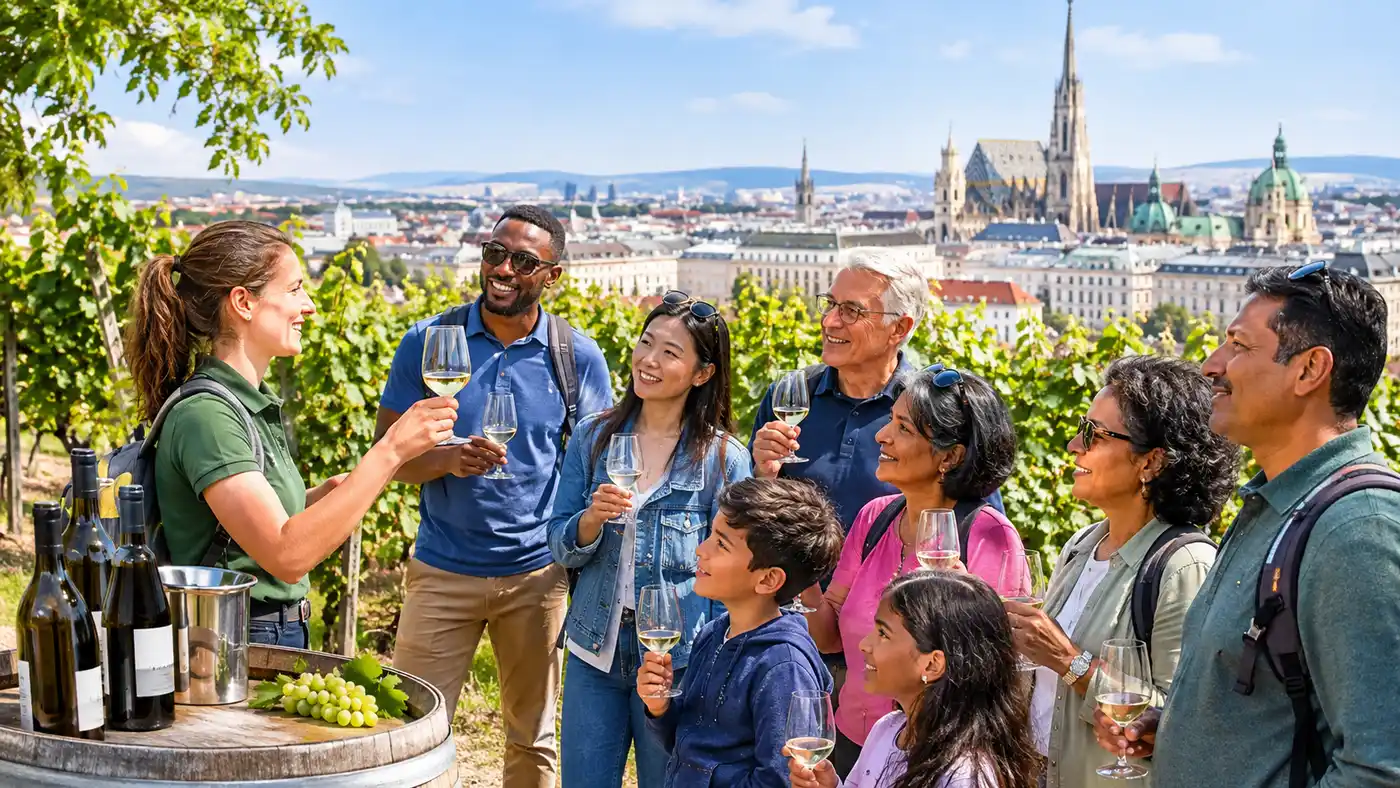
Vienna is the only world capital with an entire wine region planted strictly within its municipal boundaries. Over 700 hectares of vines climb the hills directly overlooking the Danube, feeding century-old drinking taverns with fresh carafes of field blends. Booking a proper vienna wine tour puts you straight into these hillside rows without having to figure out which private estate gates are open to the public on a random Tuesday afternoon.
Most visitors stick to beer halls near St. Stephen's or down a quick glass of generic Grüner Veltliner at a museum cafe. That misses the point entirely. The city has underground cellars that date back to Roman times, e-bike routes rolling past monastery walls, and forest trails leading straight to wooden benches where growers pour wine by the quarter-liter. Whether you want a curated city stroll or a pedal through rural river valleys, here is how the best tasting routes actually shake out.
Book your wine tasting vienna experience:
Choosing a Vienna Wine Tour: Historic Cellars vs. Hillside Vines
First-time visitors often assume all tastings happen in the old town. You can certainly tour hidden subterranean vaults underneath the First District, where limestone foundations plunge three levels below street level. These inner-city cellars show off the imperial side of things. Monks and nobles stored thousands of barrels here centuries ago to evade city wine taxes. A guided walk through historic wine villages like Grinzing on the city edge offers a completely different vibe, where wooden farmhouse gates open into gravel courtyards shaded by wild vines.
If you prefer walking between vine rows with mud on your boots, aim for Nussberg or Bisamberg. Nussberg sits on the 19th district slopes and looks straight back at the city skyline. Bisamberg sits on the opposite bank of the Danube, feeling far more rural and quiet. City center cellars are dry, cool, and atmospheric, while hillside tours are open-air social affairs where local families share rough benches over wooden platters of smoked pork and pickled peppers.
Note: Historic inner-city cellar temperatures hover around 12 degrees Celsius year-round. Bring an extra layer even if July pavement temperatures outside hit 33 degrees.
What makes Austrian wine tasting around the capital unique is Gemischter Satz. Instead of harvesting grape varieties separately and blending them in stainless tanks, vintners plant up to twenty different varieties in the exact same parcel. They pick them on the same morning and press them all together. The result is aromatic, zesty, and shockingly balanced. It is protected by strict Austrian wine law, meaning you cannot sample this specific style with this kind of pedigree anywhere else on earth.
Bike Wine Tour Vienna: Pedaling the Wachau and the Danube
Renting two wheels changes the pacing completely. A bike wine tour vienna visitors book usually heads in one of two directions: along the flat paved paths of Donauinsel within the city, or upriver into the Wachau Valley. Joining a Wachau Valley wine tour means taking a 50-minute train ride from Franz-Josefs-Bahnhof out to Krems or Melk, where small-group cycling tours begin along the river banks.
Taking a vienna wine tour on bike through the Wachau puts you among dramatic terraced vineyards supported by dry-stone walls built centuries ago. The cycling is largely flat along the river trail, though steep climbs await if you pedal up to castle ruins like Dürnstein. You stop at family-run cellars every 8 or 10 kilometers to rinse down road dust with peppery Grüner Veltliner and mineral-heavy Riesling. Most operators use e-bikes now, which saves your knees when afternoon headwinds sweep down the river gorge.
Pro tip: Saddlebags on tour bikes fill up fast. If you plan to buy bottles along the Danube, pack a lightweight tote bag or ensure your tour van offers bottle transport back to the meeting point.
If you prefer staying inside the city lines, cycling tours along the Danube Canal out to Klosterneuburg offer a flatter, shorter alternative. You ride past graffiti-covered canal walls before reaching the oldest wine estate in Austria, operated by the Augustinian canons since the year 1114. The round trip takes about 4 hours, leaving your evening wide open.
Countryside Half Day Wine Tour Near Vienna: Woods, Caves, and Roman Spas
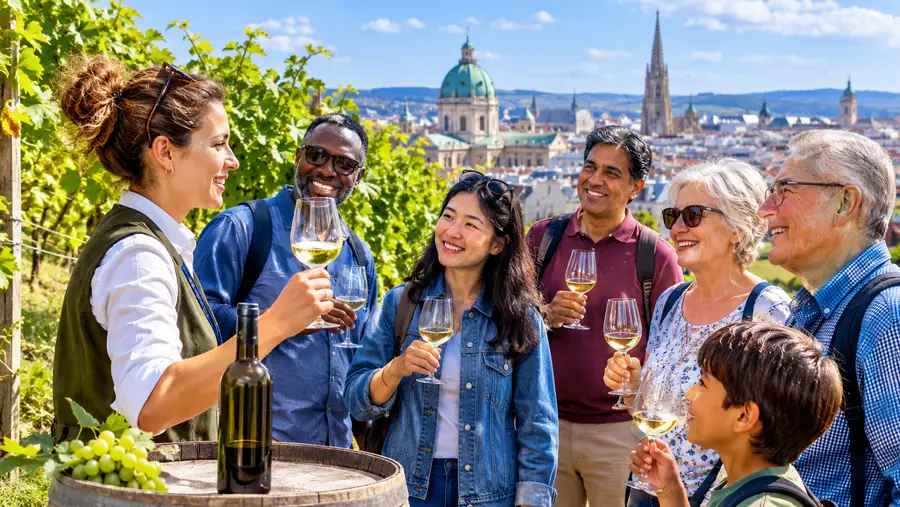
Head south of the city and the landscape flattens into the Thermenregion, an ancient winemaking pocket warmed by thermal springs. A countryside half day wine tour near vienna usually tracks this southern corridor toward towns like Gumpoldskirchen, Pfaffstätten, and Baden. The soil here shifts toward heavy clay and limestone, producing rare native white grapes like Zierfandler and Rotgipfler, along with silky Pinot Noir.
A popular variant is the vienna woods tour with underground lake and wine, which links natural sightseeing with cellar stops. These excursions stop first at the Seegrotte in Hinterbrühl, a former gypsum mine that flooded in 1932 to form Europe's largest subterranean lake. You ride a small electric boat across eerie, glassy water 60 meters underground before stepping back into daylight.
- Morning timing: tours leave around 8:30 AM to hit the underground caves before regional school groups arrive.
- Cave climate: the cavern stays at 9 degrees Celsius, requiring a sturdy fleece and flat walking shoes.
- Tasting location: the wine tasting austria leg usually takes place at a 12th-century monastic estate nearby in Thallern.
- Return window: most operators have you back in central Vienna by 2:00 PM, roughly 5.5 hours after departure.
Doing a vienna forest tour with underground lake and wine tasting lets you see the geological transition that makes regional viticulture work. The limestone shelves of the Vienna Woods protect the lower valley from cold western winds, creating a Mediterranean microclimate just 25 kilometers from the Hofburg palace. Honestly, tasting Rotgipfler after walking through damp mine shafts makes the warm hillside sun feel twice as good.
Book your wine tasting vienna experience:
How to Run a Self Guided Wine Tour Vienna Style
You do not need a tour bus or a designated driver to explore the vineyards. Vienna has the cleanest public transit network in Europe, and it drops you right at the edge of the vines for the cost of a standard €2.40 tram ticket. A self guided wine tour vienna afternoon is simple if you take Tram 38 from Schottentor out to its final stop in Grinzing, or Tram D out to Nußdorf.
From Nußdorf, follow the paved trail up the Nussberg hill along the Kahlenberger Strasse. The walk climbs steadily past private garden walls and apple trees before opening into broad vine terraces overlooking the Danube. Along the way, pop-up bush taverns known as Buschenschanken set wooden tables directly in the grass between vine rows. Look for a bunch of fresh pine twigs hanging above an open gate. If the bough is hanging, the vintner is legally open to pour their own wine.
- The route: Tram D to Nußdorf, walk up Zahnradbahnstrasse, follow signs for the Stadtwanderweg 1 loop.
- Distance: roughly 6.5 kilometers of walking with a 240-meter elevation gain on paved agricultural roads.
- Food options: taverns serve cold buffet food like Liptauer cheese spread, dark rye sourdough, and roast pork belly.
- Operating hours: hillside pop-up stands generally open Fridays from 2:00 PM and weekends from 11:00 AM, closing at dusk.
Wieninger am Nussberg and Mayer am Pfarrplatz maintain spots up here that draw huge crowds on sunny afternoons. I think the smaller, less polished wooden huts two hundred meters further up the hill serve better simple carafes without the bus tour noise. You order at a small wooden shed, pay cash, carry your glasses to a bench, and stare at the cargo barges chugging down the river below.
Comparing Top Vienna Austria Wine Tours
Picking between guided day trips, bike rides, and inner-city walkabouts comes down to how much physical effort you want to expend and how much time you have. A quick comparison helps narrow down the right format.
| Tour Style | Duration | Distance from City | Key Wine Focus | Physical Effort |
|---|---|---|---|---|
| First District Historic Cellars | 2 to 2.5 hours | Central (0 km) | Aged Riesling, Sekt, Grüner Veltliner | Low (stairs only) |
| Wachau Valley E-Bike Ride | 8 to 9 hours | 80 km west | Single-vineyard Smaragd whites | Moderate |
| Vienna Woods & Underground Lake | 5 to 6 hours | 25 km south | Rotgipfler, Zierfandler, Pinot Noir | Low to Moderate |
| Nussberg Hillside Vineyard Walk | 3 to 4 hours | 8 km north | Wiener Gemischter Satz DAC | Moderate (uphill) |
Organized vienna austria wine tours remove the guesswork around opening schedules. Austrian wine laws let small taverns open only during designated weeks throughout the year, a schedule published in printed calendars called the Heurigenkalender. Booking an organized vienna wine tasting tour guarantees you do not hike 40 minutes up a steep dirt trail only to find the tavern closed until next month.
If you want serious educational depth, book a private sommelier-led tasting in town. A certified expert will pour six to eight glasses covering Styrian Sauvignon Blanc, Burgenland Blaufränkisch, and Kremstal Grüner, explaining how soil minerality changes across Austrian wine regions. It costs more than sitting at a bench in Nußdorf, but you leave understanding why wine tastings and tours in austria have developed such a devoted following among European sommeliers.
Frequently Asked Questions about vienna wine tour
What is the best month to take a wine tour in Vienna?
September and October offer harvest energy, yellow hillside foliage, and the arrival of Sturm, a fizzy, semi-fermented grape juice that tastes like boozy cider. May and June are equally pleasant for dry weather and patio seating.
Can you visit Vienna vineyards using public transportation?
Yes. Tram D, Tram 38, and Bus 38A take you straight to the base of the Grinzing and Nussberg vine trails. You do not need a rental car or taxi to reach world-class vineyards.
Do Vienna wine tours cater to non-drinkers?
Most countryside and bike operators offer freshly pressed Austrian grape juice (Traubensaft) or elderflower cordials, alongside cellar access and scenery. Let the operator know when booking.
How much should I expect to spend on an organized tour?
Half-day guided minibus tours out to the countryside or Vienna Woods run between €85 and €135 per person. Full-day Wachau cycling tours average €110 to €160, including rail tickets and bike rentals.
Quick Reference
- Main local grape: Wiener Gemischter Satz DAC
- Top suburban hub: Grinzing & Nußdorf (19th District)
- Typical tour length: 2 hours (cellars) to 8 hours (Wachau)
- Peak season: May through late October
Book your wine tasting vienna experience:
The Bottom Line
Drinking wine in Austria is remarkably unpretentious. You will not find velvet ropes or lectures on oak aging unless you specifically seek them out. Take an afternoon off from palace museums, hop on a tram or book a small countryside van, and go sit where the grapes actually grow. A carafe of cold Gemischter Satz tastes infinitely better when you can see the Danube winding through the valley below your table.
Read more about wine tasting vienna.