Wachau Valley Wine Tours from Vienna: Day Trips & Tastings
You step off the commuter platform at Krems an der Donau, catch the scent of damp river mud and crushed gravel, and Vienna's grand boulevards suddenly feel like a distant memory. It took me three visits to lower Austria before I realized that this river valley is far more than a scenic riverboat backdrop. If you are debating whether to book a wachau valley wine tour from vienna or cobble together your own journey by train, the options vary widely in price, effort, and how much wine you will actually get to sample.
Between the monastery town of Melk and the old gate at Krems, the Danube cuts through thirty-odd kilometers of slate and granite hills. The river carved this gorge over millennia, and generations of vintners hand-built dry-stone terraces to hold the earth in place. Cool winds spill down from the northern Waldviertel forests and smash directly into warm eastern air from the Pannonian basin. The vines get stressed by the temperature swings between sun-baked afternoons and shivering nights, which pushes the grapes into bright acidity and intense aromatics. Here is how to plan your day out among the terraces, cellars, and cobblestones.
Book your wine tasting vienna experience:
Choosing the Right Wachau Valley Wine Tour from Vienna
Vienna is famous for having commercial vineyards right inside the city perimeter, and spending an evening at a suburban tavern is great fun. But the Wachau is a completely different landscape. The steepness of the slopes means machines cannot harvest most parcels, so almost every bunch of grapes gets picked by hand. If you have an afternoon open in town, you can read our breakdown of the best Vienna wine tours to see how city-edge vineyards compare to the countryside.
For most visitors, booking a organized Wachau valley small group tour and wine tasting from vienna makes the most sense. Driving yourself is a non-starter if you want to drink wine, because Austria enforces a strict 0.05% blood alcohol limit, and traffic stops on valley roads are routine during harvest. Taking the regional train gives you freedom, but once you arrive in a village, getting between scattered estates on foot eats up your hours fast.
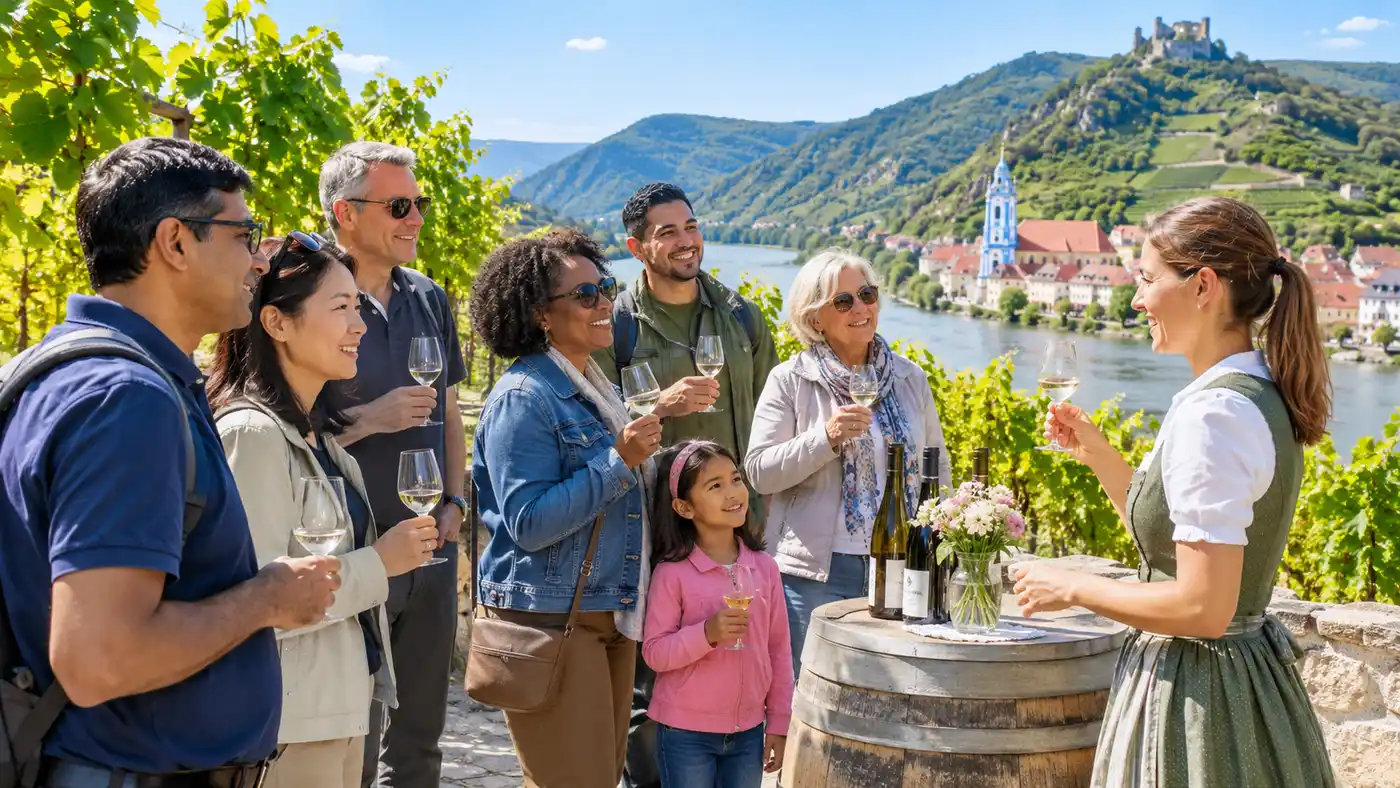
A small group tour usually caps guests at eight or twelve people in a passenger van. The guide handles the route, buys the ferry tickets, and drives you directly into village side-streets where tour buses cannot fit. More importantly, small group outfits hold personal connections with family cellars. Many small estates in Weissenkirchen and Spitz do not keep regular public tasting rooms open every day. If someone does not call ahead to arrange a visit, the heavy oak door stays locked while the owners work out among the vines.
Private van tours cost significantly more, often starting around €550 per couple, but they let you set the pace. If you want to linger over lunch for two hours in a leafy tavern courtyard instead of rushing off to climb a castle ruin, a private booking accommodates you.
The Wachau Valley Wine Tasting Bike Tour from Vienna
Pedaling alongside the Danube sounds idylllic, and on sunny days it genuinely is one of the best day trips in central Europe. A typical wachau valley wine tasting bike tour from vienna starts by meeting your guide either in central Vienna to catch the train together or right at the depot near the Krems train station. From there, you get fitted with a cruiser or an electric bike, adjust your saddle, and head directly onto the riverside cycle path.
The riding itself is flat and straightforward. The path forms part of the EuroVelo 6 route, paved and separated from vehicle traffic for almost the entire distance. You ride between the water and the rising walls of rock, pedaling past small stone chapels, private apricot orchards, and cellar alleys tucked into the cliffs. The distance covered usually hovers around 26 to 32 kilometers, broken up into short four-kilometer stretches between stops.
Pro tip: Pay the extra €15 to upgrade to an e-bike if your tour offers it. The valley path has very little shade, and pushing a heavy steel-frame town bicycle into a stiff western headwind after three cellar tastings will ruin your afternoon.
Most bike itineraries make an extended stop in Dürnstein. You park your bicycle by the city gate and walk the cobblestones up toward the ruined fortress where King Richard the Lionheart was held hostage in the late winter of 1192. The path to the top is rocky and takes about 20 minutes of steady uphill walking, but the view across the blue baroque tower of Dürnstein Abbey and the winding Danube gorge is worth the sweat. After the hike, your guide rounds everyone up for lunch at an outdoor garden before heading back out on two wheels toward the afternoon wineries.
Local Terroir and Wine Tasting Krems Austria
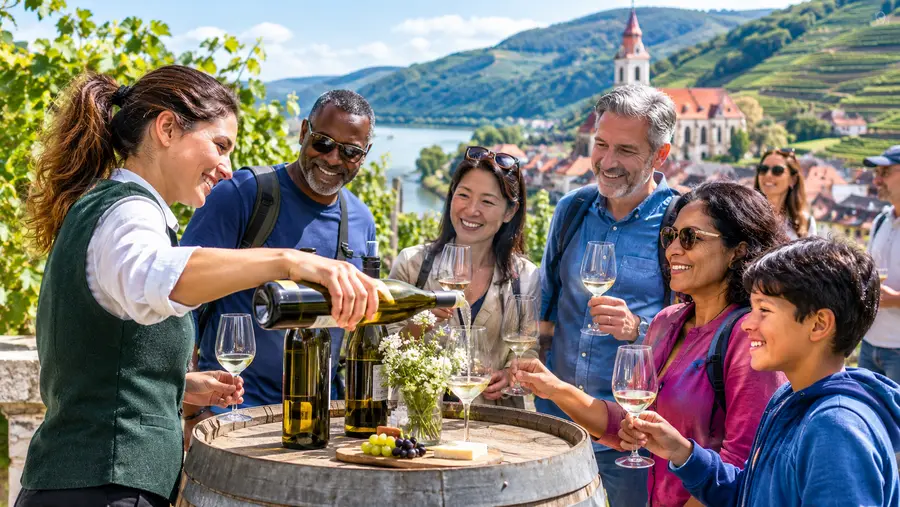
Krems sits at the eastern mouth of the Wachau, marking the transition from rugged river cliffs to gentler rolling farmland. With roughly 25,000 residents, it functions as the working hub of the regional wine trade. If you plan to travel independently by train, scheduling your wine tasting Krems Austria side makes transit painless because the main train station is only an eight-minute walk from historic cellars.
Wachau wines follow their own strict naming system, entirely separate from the rest of Austria. The local vintners association created three categories based on natural grape sugar levels at harvest, with zero chaptalization or enrichment allowed:
- Steinfeder: light, aromatic wines clocking in at a maximum of 11.5% alcohol. Named after a delicate grass that grows on the stone cliffs, these taste crisp and pair well with smoked fish or cold cured pork.
- Federspiel: medium-bodied wines between 11.5% and 12.5% alcohol, named after a falconer's lure. These are the workhorse wines of the valley, dry and balanced, offering bright fruit without being heavy.
- Smaragd: rich, powerful dry wines above 12.5% alcohol, named after the shiny emerald-green lizards that bake in the sun on vineyard terrace walls. These are complex, late-picked wines that can age gracefully for twenty years.
Two grape varieties dominate the landscape. Grüner Veltliner covers roughly half of the valley's planted ground. On lower terraces where deep, windblown loess soil blankets the earth, Grüner develops its signature character: white pepper, yellow apples, citrus zest, and an herbal freshness. Further up the canyon walls, where topsoil disappears and vine roots must fracture hard gneiss and slate to find water, Riesling rules. Wachau Rieslings are bone-dry, showing peach, flint, wet stone, and razor-sharp acidity that cuts clean through rich Austrian pork dishes.
Book your wine tasting vienna experience:
Comparing Wachau Valley Wine Tour Options
Deciding which tour format fits your travel style depends on your budget, energy level, and how deeply you want to dive into the wine culture. Some travelers want an active workout outdoors, while others prefer sitting in an air-conditioned van while someone else handles the road.
| Tour Type | Average Cost | Group Size | Activity Level | Wineries Visited |
|---|---|---|---|---|
| Small Group Van Tour | €135 - €175 | 6 to 8 people | Low (short walks) | 3 to 4 estates |
| Guided Bike Tour | €85 - €125 | 10 to 16 people | Moderate (25-32 km ride) | 2 to 3 estates |
| Danube Cruise & Wine Combo | €75 - €110 | Large group (30+) | Low (boat deck) | 1 large cooperative |
| Independent (Train + Local Bus) | €45 - €60 | Self-guided | Flexible | Varies by planning |
Van tours give you access to hidden hamlets like Spitz and Unterloiben where large tourist buses cannot navigate the narrow alleyways. Bike tours provide incredible sensory immersion, hearing the river and smelling the fruit trees, but you cover less total geographic ground. River cruise combos offer great panoramic views from the sundeck of a passenger boat, but they tend to feel commercial, herding large groups into high-volume tasting halls rather than intimate family cellars.
Logistics, Timing, and How to Plan Your Day
The Wachau runs on an agricultural clock. Visiting during winter is quiet and somewhat bleak; the hills turn grey, the vine canes are trimmed back to bare wood, riverboats halt their schedules, and many village restaurants shut down completely until spring.
The travel window opens in April when the valley's 100,000 apricot trees erupt into pale blossom across the valley floor. May and June bring warm days, lush green hills, and quiet bike trails before the summer crowds arrive. July and August bring heavy heat, with temperatures along the riverbank often climbing above 32 degrees Celsius, making afternoon cycling somewhat punishing.
September through mid-October is the undisputed prime season. The harvest is in full swing, tractors carrying fresh-picked grapes rumble down village lanes, and the leaves on the terraced hills turn vibrant shades of amber and gold. You can also sample Sturm, a cloudy, half-fermented grape juice that tastes sweet and fizzy like alcoholic soda, sold in open glass carafes at rustic taverns.
Note: Authentic traditional wine taverns, called Heurigen, do not stay open year-round. They operate on rotating village calendars called Ausg’steckt. When an estate is open for business, they hang a fresh wreath of pine branches over their wooden entry gate.
If you choose to navigate the day independently by train, keep these practical points in mind:
- Train departure: take the direct REX 4 regional express train from Vienna's Franz-Josefs-Bahnhof or Spittelau stations to Krems; the journey takes about 68 minutes and costs roughly €19 each way.
- Bus connections: local bus line 715 departs Krems station every hour, running along the north riverbank to Dürnstein, Weissenkirchen, Spitz, and Melk.
- Cash reserves: bring at least €60 in cash, because small family cellars, seasonal tavern counters, and local bicycle ferries often do not accept bank cards.
- Cellar closures: Sunday afternoons can be surprisingly quiet outside high harvest season, so confirm open hours in advance if you are traveling without a guide.
Frequently Asked Questions about wachau valley wine tour from vienna
How long does a Wachau wine day trip take?
Most organized tours from Vienna last between 8 and 10 hours, departing central Vienna around 8:30 or 9:00 in the morning and returning by 18:00 or 19:00 in the evening. If you go independently, allow at least 7 hours to make the train journey worthwhile.
Can you visit Wachau wineries without an advance booking?
Large estates and commercial tasting rooms in Krems welcome walk-in visitors during standard business hours. Smaller family-owned cellars in villages like Weissenkirchen or Spitz usually require advance notice by phone or email, especially during the busy harvest months of September and October.
Is the bike ride between Krems and Melk difficult?
The cycling is mostly flat with only minor undulations, following dedicated paved riverside paths on both banks of the Danube. The distance between Krems and Melk is about 38 kilometers, which is easily manageable for anyone with basic fitness, provided you take breaks at the villages along the way.
Quick Reference
- Transit: 68-minute direct train from Vienna to Krems
- Key Grapes: Grüner Veltliner and Riesling
- Wine Classification: Steinfeder, Federspiel, and Smaragd
- Prime Months: May, June, September, and October
- Distance to Vienna: Roughly 75 kilometers west
Book your wine tasting vienna experience:
Worth the Trip?
Escaping the urban center of Vienna for the terraced hills of the Wachau resets your perspective on Austrian culture. Sitting at an outdoor trestle table with a cold glass of Federspiel, looking past rows of ripening grapes down to the slow gray roll of the Danube, is an experience you simply cannot replicate inside a city wine bar. Whether you pedal a cruiser along the riverbank or let a guide steer you through ancient stone cellars, spending a day tasting wine in this river valley will likely end up being your favorite day in Austria.
Read more about wine tasting vienna.