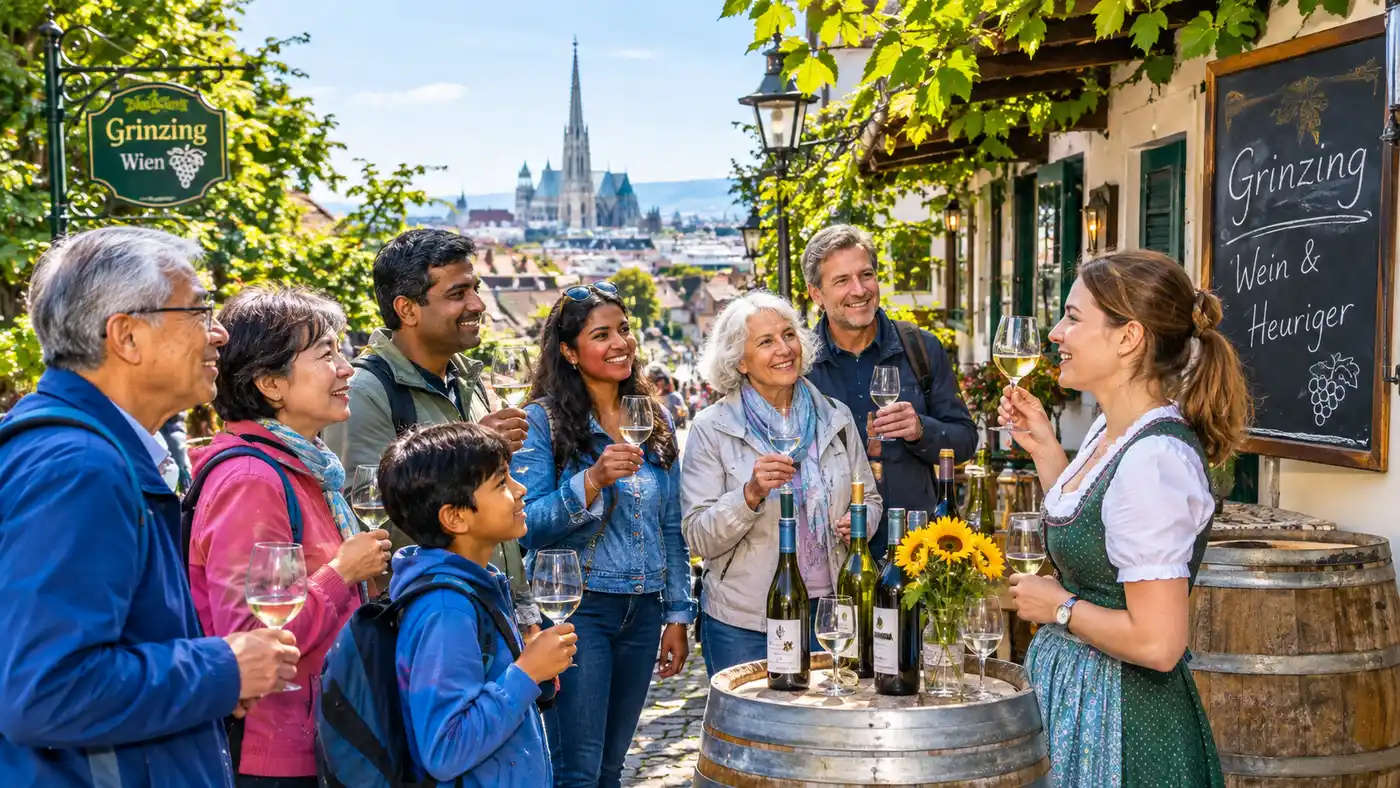
Visiting Grinzing: Things to Do in Vienna's Wine Village
Most tourists stay glued to the Ringstrasse. They stare at imperial palaces until their necks ache, pay seven euros for lukewarm coffee in gilded halls, and assume they have seen Vienna. But jump on the 38 tram at Schottentor, ride it past the grand apartments out to the very last stop, and the city completely changes. Low-slung Biedermeier cottages replace marble facades, church steeples peek over rolling hills, and the air smells faintly of damp soil and fermenting grapes. If you are looking for authentic things to do in grinzing, you have to leave your rigid sightseeing checklist behind.
Technically, this pocket belongs to Döbling, the 19th district of Vienna. Yet nobody out here really thinks of it as the city. Grinzing village was an independent wine-growing town until 1892, and locals still guard that identity with stubborn pride. Surrounded by roughly 700 hectares of commercial vineyards inside the municipal boundary, it offers an odd blend of alpine village stillness and urban tavern culture. Whether you want to hike ridge paths with panoramic views across the Danube or sit under an ivy-covered pergola with a carafe of cold white wine, Grinzing is where Vienna goes to exhale.
Book your wine tasting vienna experience:
Sipping Gemischter Satz in Historic Heurigen
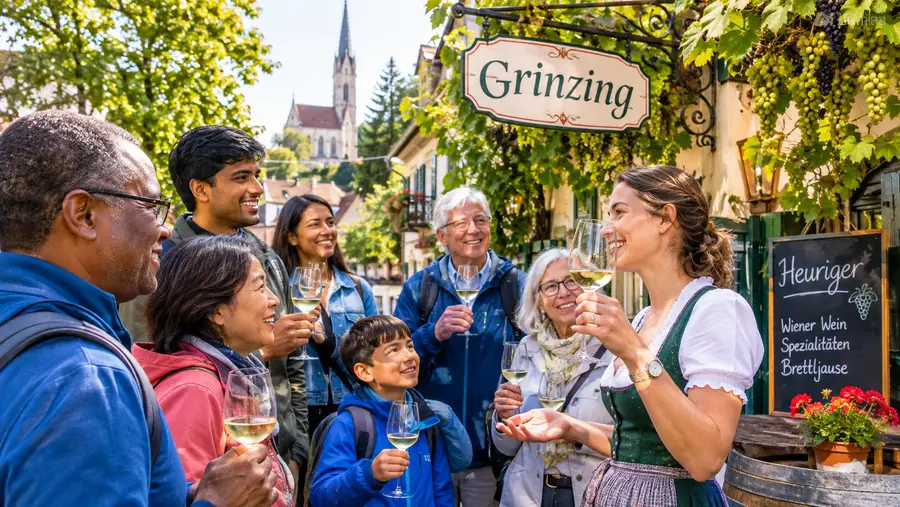
Wine is the entire reason this place exists. Romans planted vines on these southwest-facing hills two thousand years ago, and Emperor Joseph II signed a decree in 1784 that let vintners sell their own homemade wine alongside cold food without a restaurant license. That decree birthed the Heuriger. Today, sitting in a tavern garden is easily among the top what to do in grinzing experiences.
Look for a green wreath made of pine branches hanging over the doorway. If the branch is out, the tavern is open for business. Once inside, do not wait for someone to take your dinner order. You head straight to the counter, point at what looks good behind the glass, and pay by weight. The tavern experience here revolves around cold cuts, sharp spreads, and heavy roast meats meant to balance the acidity of young wines.
Note: Many family-run taverns in grinzing austria close on alternating weeks or shut down completely during winter. Always look up if a place is marked as ausg'steckt (open) before hiking all the way up a back lane.
Order a glass of Gemischter Satz. It is a traditional field blend where growers harvest and ferment up to twenty different grape varieties together from a single plot. It tastes crisp, mineral-forward, and totally unlike single-varietal wines. If you want to dive deeper into the country's tavern culture, you can read through our guide to the best Grinzing Heuriger wine taverns before picking a table.
When you walk up to the cold buffet, ordering can feel intimidating if your German is rusty. Just point at what you want. These are the staple dishes you should try:
- Liptauer spread: a rich, orange-tinted sheep cheese whipped with sweet paprika, butter, capers, and caraway seeds. Spread it thickly onto crusty rye bread.
- Grammelschmalz: rendered pork fat studded with crispy bits of crackling. It sounds intense, but paired with raw onions and salt, it cuts through crisp wine brilliantly.
- Surbraten: pork shoulder cured in salt and spices before roasting, served cold in thin slices with pickled peppers.
- Kren: freshly grated horseradish served in mounds. It clears your sinuses instantly, so use it sparingly beside fatty meats.
The Kahlenberg to Grinzing Walk and Vineyard Trails
I always tell friends to earn their wine before they sit down. Grinzing acts as the main basecamp for exploring the Vienna Woods, and you can easily combine hillside trails with village wandering. The most popular route is the city's Stadtwanderweg 1, but the downhill kahlenberg to grinzing walk is much kinder on your legs.
Take bus 38A from the Grinzing tram loop up to the top of Kahlenberg, a summit sitting roughly 484 meters high. The view from the terrace stretches over the whole Vienna basin, with the Danube river cutting a wide silver ribbon through the flats. On clear mornings, you can even spot the Little Carpathians in Slovakia. From the summit, follow the trail markers downward through beech forests and hillside plots.
Pro tip: Wear shoes with good grip. The stone paths cutting through the vineyards can get slick after autumn rain, and the gravel on the steeper descents along the Cobenzl trail will slide right out from under thin sneakers.
As you descend toward the grinzing district vienna border, the path weaves past tiny pop-up wine huts nestled among the vines. In autumn, local winemakers put out wooden benches where you can buy a glass of wine and watch the evening light hit the rooftops below. If you want someone else to handle the logistics and introduce you to the winemakers directly, there are fantastic Vienna wine tours that hit these exact slopes without the guesswork.
Beethoven’s Summers and Romantic Remnants
Long before tourists arrived, classical composers fled here to escape Vienna's summer heat and stench. Ludwig van Beethoven spent several months living in this area, most famously during the summer of 1802. Facing the reality that his hearing loss was permanent and worsening, he wrote his gut-wrenching Heiligenstadt Testament here. His old living quarters on Probusgasse are now a dedicated museum.
The museum is quiet and thoughtfully curated. You walk through rooms containing his ear trumpets, furniture, and personal letters, with headphone stations letting you hear musical passages modified to simulate how Beethoven perceived them as his deafness progressed. It feels intensely personal. Just around the corner, Beethoven also stayed briefly at Mayer am Pfarrplatz, which is still pouring wine in its courtyard today.
A 15-minute stroll up the hill takes you to the Grinzinger Friedhof. It sounds morbid, but this cemetery is one of the most serene corners in grinzing village vienna. Gustav Mahler is buried here beneath an understated grey headstone designed by Josef Hoffmann. Mahler requested that his grave carry only his name, arguing that anyone who cared to find him would already know who he was. His wife, Alma Mahler-Werfel, rests nearby.
Book your wine tasting vienna experience:
Grinzing Across the Seasons: Sturm and Winter Markets
Most travelers arrive between May and September, which is lovely. The gardens are full, rose bushes climb up stone arches, and the evenings stay warm until 10 PM. Yet autumn brings something even rowdier: Sturm season.
Sturm is cloudy, partially fermented grape juice that appears for about four weeks starting in mid-September. It tastes sweet like soda, but it carries around 4% to 10% alcohol and sneaks up on you quickly. Tradition dictates you hold your glass in your left hand and say "Mahlzeit" rather than "Prost" before drinking it. Locals crowd into taverns on chilly October afternoons specifically to drink fresh Sturm alongside plates of roasted chestnuts.
December completely transforms the village square. While downtown Vienna fills with massive crowds, the grinzing christmas market on the church square remains wonderfully small and local. Vendors sell hand-carved ornaments, honey products from the Vienna Woods, and steaming mugs of punch flavored with local red wine. Strings of warm bulb lights hang over snow-dusted roofs, making the cobblestone alleys feel like a stage set from a century ago.
Getting Oriented: Transit and Staying Overnight
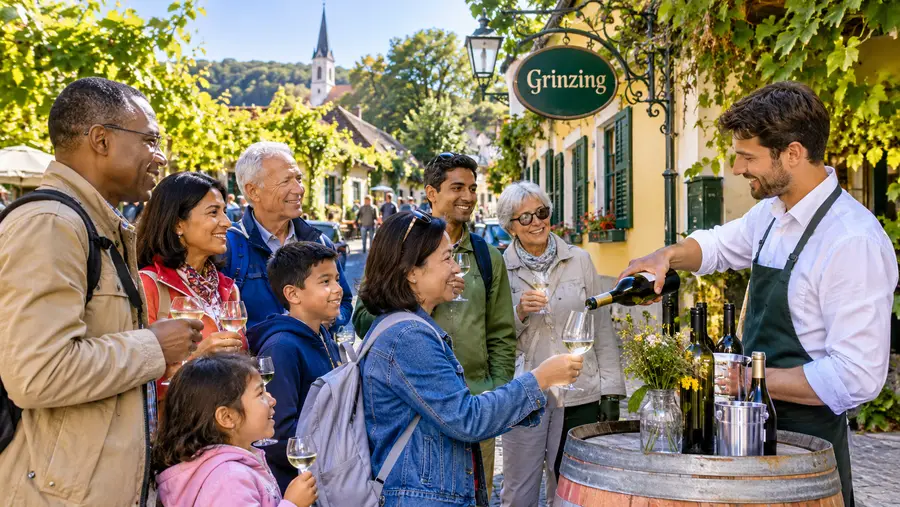
Figuring out how to get to grinzing from vienna is straightforward because the public transport system is so efficient. Tram 38 leaves every few minutes from the underground Schottentor transit hub in central Vienna. The ride takes roughly 23 minutes, climbing gently northward past classic apartment blocks until it drops you right in the center of the village at the Grinzing terminus.
To help plan your route, here is a quick overview of how the primary highlights compare:
| Stop / Attraction | Type | Transit Time from Center | Best For |
|---|---|---|---|
| Pfarrplatz | Historic Square | 25 mins (Tram 38) | Heuriger taverns and Beethoven history |
| Kahlenberg | Viewpoint / Summit | 45 mins (Tram 38 + Bus 38A) | Panoramic city views and hiking trails |
| Beethoven Museum | Cultural Site | 27 mins (Tram 37 to Hohe Warte) | Classical music lovers |
| Grinzing Cemetery | Historic Site | 28 mins (Tram 38) | Quiet walks and Mahler's grave |
If you prefer a slower base outside the noisy inner city, booking a grinzing hotel can be a great move. A few historic guesthouses and boutique hotels sit tucked behind the main streets, offering quiet nights and immediate morning access to hiking trails. You can pull up a grinzing vienna map on your phone and easily wander the district on foot without ever needing a taxi.
Keep these practical logistics in mind when planning your day:
- Transit passes: standard Vienna transit tickets and 24-hour passes cover the entire journey on Tram 38 and Bus 38A, since Grinzing lies within the central zone.
- Cash requirements: many older Heurigen in the grinzing district do not accept card payments, especially for buffet tabs under twenty euros. Bring physical cash.
- Timing: arrive around 3:00 PM if you want to walk the vineyards in daylight and settle into a tavern courtyard just as the evening crowd trickles in.
Frequently Asked Questions about things to do in grinzing
How do you get to Grinzing from central Vienna?
Take the 38 tram directly from the Schottentor station on the Ringstrasse. It runs roughly every 6 to 8 minutes, and the journey takes about 23 minutes straight to the final stop at Grinzing.
What is the best time to visit Grinzing?
Late spring through autumn is the most atmospheric time, especially September and October during harvest when fresh Sturm is served. Taverns are liveliest on Friday and Saturday evenings.
Are the wine taverns in Grinzing open all year?
Yes, many larger taverns operate year-round, while smaller family estates rotate their schedules. Even in the dead of winter, you will easily find historic rooms with tiled stoves open for food and wine.
Quick Reference
- 23 minutes from Schottentor on Tram 38
- Signature wine: Gemischter Satz (field blend)
- Tavern food ordered by weight at the buffet
- Peak season runs May through October
Book your wine tasting vienna experience:
Worth the Trip?
Grinzing offers something rare for a major European capital. Within half an hour of leaving the imperial core, you can be walking between leafy grapevines with dirt on your boots, listening to church bells echo across the hills. It is easy to spend an entire afternoon losing track of time over a carafe of chilled white wine and a plate of warm roast pork. Next time you find yourself wandering Vienna, buy a tram ticket, ride the 38 line out to the very end, and let the city slip away.
Read more about wine tasting vienna.